

Why Is It So Damn Hard to Make Friends After 50?
Mar 16, 2026
Somewhere between menopause, moving, and realizing you now have strong opinions about protein intake and women's equality, making friends got weirdly hard. No one really warns you about this part of life. They warn you about hot flashes and retirement accounts and maybe bone density, but no one sits you down and says, “By the way, at some point you may look around and realize making new friends suddenly feels like trying to get into an exclusive club where you don’t know the password.”
If you’ve ever laid awake at night wondering why this feels so difficult now, you’re definitely not alone.
Your 50s can be a time of massive life transitions. Kids move away or build their own lives. Careers change or end. Parents age. Bodies change. Friend groups that once felt permanent scatter in different directions. Life rearranges itself in ways you didn’t fully anticipate. For me, it started when I retired and moved across the country to be closer to my grandson, which was absolutely the right decision. I would do it again in a heartbeat. But what I didn’t expect was the social reset that came with it. Starting over somewhere new sounded exciting. What I didn’t realize was how surprisingly hard it would be to build friendships again from scratch.
When you’re younger, friendships happen almost accidentally. School forces proximity. Work gives you daily interaction. If you have kids, their activities practically hand you a rotating cast of other parents to talk to. You end up around the same people over and over again, and eventually some of those people become your friends. After 50, that built-in structure disappears. Suddenly, if you want friends, you actually have to go looking for them. And that turns out to be a lot harder than it sounds.
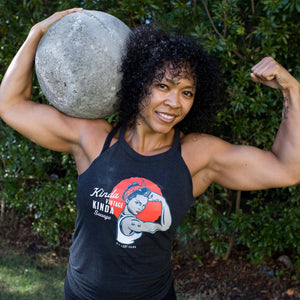
Take my gym, for example. I’m the oldest woman there. Not “one of the older ones.” The oldest. Most of the women are in their 30s juggling young kids, school schedules, and lives that look like logistical puzzles. They’re wonderful people, but they’re in a completely different chapter of life. They’re worried about daycare pickups while I’m worried about maintaining muscle mass and getting enough protein so my bones don’t crumble in twenty years. The overlap in daily life experience is… limited.
Then there’s pickleball, which has introduced me to some of the most impressive people I’ve ever met. Pickleball courts are filled with absolute legends in their 70s who will casually destroy you on the court and then mention that they started playing competitively at 65. These women are badass. But even there, friendships don’t just magically happen. You play, you laugh, you say “great game,” and then everyone goes back to their lives.
Another thing that changes somewhere around menopause is your tolerance for certain types of people. And I’m not sure anyone talks about that enough. Post-menopause comes with a strange personality upgrade. It’s like my eyesight got worse, but my ability to identify BS got dramatically better. When I was younger, I probably tolerated friendships that weren’t the best fit. Now my brain seems to run some kind of internal screening process that goes, “Nope. Not our people.” While this might be emotionally healthy, it doesn’t exactly help when you’re trying to meet new friends.
I’ve tried putting myself out there. I volunteered at a horse rescue for a while, which sounded like the perfect idea in theory. Animals, helping a good cause, meeting people with similar interests. In reality, let’s just say the vibe wasn’t my vibe. And that’s the tricky thing about trying new environments as an adult. Sometimes you walk into a place and immediately realize you’re probably not staying long enough to learn anyone’s last name.
Then there was my brief experiment with Bumble BFF, which is essentially a dating app for friendship. The idea sounds promising until you realize you’re sitting there swiping through profiles thinking, “Why am I suddenly this picky?” Within about ten minutes I had swiped left on nearly everyone and started questioning my own standards for human interaction.
The frustrating part is that the science of friendship actually explains why this all feels so difficult. Researchers at the University of Kansas studied how friendships form and found that most friendships rely on a few key elements: proximity, repeated interaction, and shared vulnerability. When we’re younger, those things happen naturally because our environments are structured around school, work, and family life. After 50, those same ingredients don’t show up automatically anymore. You have to intentionally place yourself in situations where you see the same people repeatedly over time.
And friendships take more time than we realize. One study found it takes about 50 hours with someone to move from acquaintance to casual friend, around 90 hours to become real friends, and more than 200 hours of shared time to develop a close friendship. When you look at it that way, it makes sense why chatting with someone once at yoga class doesn’t suddenly lead to brunch plans. Friendship takes time together, and as adults, time is something everyone guards pretty closely.
But friendships matter more than we sometimes realize. Psychologists consistently find that strong friendships are linked to lower stress levels, reduced risk of depression, stronger immune function, and even better cognitive health as we age. Some research suggests that social connection may be as important to long-term health as diet and exercise. Which is slightly ironic considering how much time many of us spend focusing on fitness while quietly struggling to rebuild our social circles.
I’ve had those deep friendships before, the kind where someone knows your history, understands your humor, and can tell when something is wrong even if you say everything is fine. When you’ve experienced that kind of connection before, you feel the absence of it when it’s not there anymore. Not dramatically, just quietly, like something meaningful is missing from the background of life.
What I’ve come to realize is that making friends at this stage of life requires intention and persistence. It means continuing to try new things, even when the first few attempts don’t stick. It means showing up in places where repeated interaction can happen, whether that’s a fitness class, a pickleball league, volunteering, hobby groups, or community activities. It also means occasionally accepting that some environments simply won’t be the right fit.
Honestly, part of me thinks we might need some kind of speed dating system for friendship. Five minutes, a few questions, quick vibe check, and then move on to the next person. Because the hardest part isn’t meeting people. It’s finding your people.
In the meantime, the best advice psychologists tend to give is fairly simple. Choose activities that happen regularly so you see the same people over time. Look for groups centered around shared interests rather than random networking. Be willing to suggest grabbing coffee or continuing a conversation outside the activity. And accept that not every connection will turn into a friendship, which is normal.
Mostly, it comes down to continuing to show up. Even when it feels awkward. Even when you’re the oldest person in the gym. Even when the horse rescue wasn’t your vibe and Bumble BFF made you question your own standards for humanity. Because friendships rarely appear instantly. They grow slowly through familiarity, shared experiences, and small moments of connection.
And if you’re over 50 and quietly wondering why this feels harder than it used to, you’re not imagining things. You’re not antisocial or broken or too picky. You’re just in a stage of life where friendships no longer happen automatically. They happen intentionally.
Which means the only real strategy is to keep putting yourself out there and trusting that somewhere, someone else is probably doing the exact same thing.