

AI Is Biased Against Older Women — And Honestly, That Tracks
Dec 15, 2025
Let’s start with the uncomfortable part.
AI isn’t broken.
It’s doing exactly what it was taught to do.
And what it’s been taught — by the internet, media, hiring systems, and decades of cultural nonsense — is that older women are less relevant, less capable, less powerful, and ideally… invisible.
Recently, researchers at Stanford published findings showing that large language models (yes, the same kind of AI being used in hiring, recruiting, performance reviews, and “talent optimization”) consistently undervalue older working women. Same experience. Same credentials. Same inputs.
Different outcome.
Men are assumed to be older and more experienced.
Women are quietly rewritten as younger, less seasoned, or less authoritative.
If your reaction is “wait, WHAT?” — welcome to the club.
If your reaction is “yeah… that sounds about right” — also welcome.
So What Is This Actually Saying?
The Stanford research found that when AI systems generate or evaluate professional profiles, older women are systematically downgraded. Not because of skill gaps. Not because of performance. But because of how age and gender are culturally coded in the data AI learns from.
Translation:
AI has absorbed society’s worst assumptions and now repeats them with confidence.
And that should scare the hell out of all of us.
Because these tools aren’t theoretical. They’re already being used to:
- Screen resumes
- Rank candidates
- Recommend promotions
- Suggest “ideal” leadership profiles
When bias gets automated, it doesn’t just persist — it scales.
Here’s the Part We Need to Say Out Loud
AI didn’t wake up one day and decide to be ageist.
It learned it from us.
From media that shows men aging into authority while women age out of relevance.
From workplaces that praise “experience” in men and call it “being set in your ways” in women.
From a culture that celebrates older men as leaders and older women as liabilities.
Researchers looking beyond Stanford found the same patterns across millions of images, videos, and profiles online. Women are consistently portrayed as younger than men in similar roles — especially in professional settings.
So when AI looks at the world, it sees this message on repeat:
Women peak early.
Men mature into value.
And then it builds systems around that belief.
Why This Is a Bigger Problem Than “Tech Bias”
This isn’t just about algorithms.
It’s about who gets seen as competent.
Older women already face a fun little cocktail of:
- Ageism
- Sexism
- Assumptions about flexibility, relevance, and energy
Now add AI quietly reinforcing those assumptions before a human even enters the room.
That’s how qualified women get filtered out without explanation.
That’s how leadership pipelines get skewed.
That’s how we keep asking, “Why are there so few women over 50 in these roles?” while pretending we don’t know the answer.
And Let’s Be Clear — This Hurts Everyone
When older women are erased, underestimated, or sidelined:
- Companies lose experience
- Teams lose perspective
- Younger women lose role models
- Society loses proof that strength, growth, and leadership don’t expire
We are literally training machines to believe women have an expiration date.
That’s not innovation. That’s regression with a software update.
So What Do We Do About It?
First: we stop pretending this is a “future problem.”
It’s happening now.
Second: companies using AI need to audit their systems, diversify training data, and stop treating algorithms like neutral decision-makers. They aren’t.
Third — and this part matters just as much — we change the narrative AI is learning from.
That means:
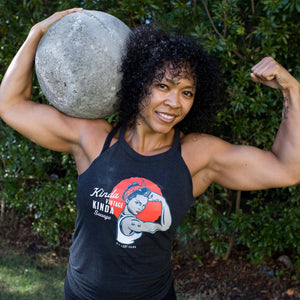
- Showing older women as capable, strong, skilled, and relevant
- Centering experience as an asset, not a liability
- Calling out ageist language when we see it — especially when it’s dressed up as “efficiency” or “culture fit”
And finally, we stop asking older women to soften, shrink, or rebrand themselves to survive systems that were never designed for them.
The Bigger Truth
AI bias against older women isn’t a tech issue.
It’s a mirror.
It reflects how society already treats women who refuse to disappear quietly after 40, 50, or 60. It shows us exactly where we still believe power belongs — and where it doesn’t.
And if we don’t like what that mirror is showing us?
Good.
That discomfort is the starting point.
Because older women aren’t the problem.
The systems that keep trying to erase them are.
And whether it’s AI, media, or boardrooms — we’re done letting those systems define our worth.